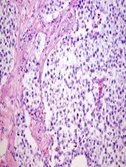
Q32. A 25-year-old male presents with a painless, progressively enlarging swelling in the right testis. There is no history of trauma or infection. H&E stain of the excised mass shows the below findings. What is the most likely diagnosis?
Tap an option to reveal the answer
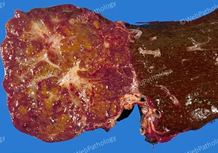
Q34. The gross specimen of a liver mass excised from patient is shown below. Based on the image findings, what is the most likely diagnosis?
Tap an option to reveal the answer

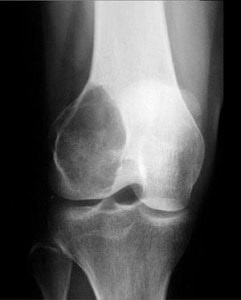
Q394. Which statement is incorrect about the pathology shown in the image:

Tap an option to reveal the answer
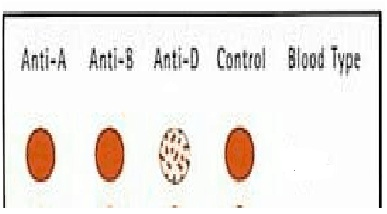
Q478. Identify the blood grouping process done here. Slide given with: AB no clumps, Clumping in O & No clumps in control. Which group does this signify?

Tap an option to reveal the answer
Q31. An elderly male presents with progressive cervical lymphadenopathy and increased bleeding tendency. Peripheral blood smear shows >25% blasts, cytochemistry reveals MPO positivity, and the findings shown below are consistent with this condition. Which of the following cytogenetic abnormalities is most likely associated with it?
Tap an option to reveal the answer
Q33. A 50-year-old female presents with a firm thyroid swelling. FNAC reveals marked cellular pleomorphism with variation in cell size and shape. Histopathology shows amyloid deposition in the stroma. Immunohistochemistry is TTF-1 negative, positive for chromogranin and synaptophysin. Which of the following is the most likely diagnosis?
Tap an option to reveal the answer
Q35. An elderly male presents with bilateral cervical lymph node enlargement. Immunohistochemistry reveals CD10 positive and BCL2 positive cells. Which of the following cytogenetic abnormality is commonly associated with this condition?
Tap an option to reveal the answer
Q36. Which of the following programmed cell death mechanisms are caspase-dependent?
Tap an option to reveal the answer
Q37. 6-year-old child presents with pallor, jaundice, and splenomegaly. The child has a history of intermittent anemia since infancy. Laboratory investigations reveal low hemoglobin, elevated reticulocyte count, elevated MCHC. On further questioning, it is revealed that the father had similar symptoms in childhood. Which of the following is the most likely diagnosis?
Tap an option to reveal the answer
Q38. A 35-year-old patient presents with progressive vision loss, more prominent in the temporal fields. MRI brain reveals a suprasellar mass compressing the optic chiasm. Histopathological examination of the excised lesion shows 'wet keratin' and stratified squamous epithelium. Which of the following is the most likely diagnosis?
Tap an option to reveal the answer
Q39. Which of the following technique is most commonly used to compare and quantify CD markers on immunophenotyping?
Tap an option to reveal the answer
Q44. An elderly female is found unconscious with frothy sputum and is brought to the emergency room. On evaluation, she is noted to have tachypnea, basal crepitations, and bilateral pedal edema. Chest X-ray shows pulmonary congestion, and a lung biopsy reveals hemosiderin-laden macrophages. Which of the following conditions is least likely associated with this histopathological finding?
Tap an option to reveal the answer
Q200. What are Gitter cells:
Tap an option to reveal the answer
Q202. Which of the following exocrine glandular ducts are not obstructed in cystic fibrosis:
Tap an option to reveal the answer
Q248. Glanzmann thrombasthenia is due to
Tap an option to reveal the answer
Q249. Apoptotic gene is-
Tap an option to reveal the answer
Q252. Fish mouth appearance of valve in RHD is due to-
Tap an option to reveal the answer
Q253. Follicular lymphoma positivity?
Tap an option to reveal the answer
Q254. what is the histological difference between them in Ulcerative colitis & Crohn’s disease?
Tap an option to reveal the answer
Q256. Type of necrosis seen in blood vessels due to immune reactions-
Tap an option to reveal the answer