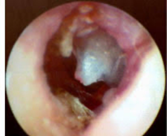
Q158. A 28-year-old male with history of chronic ear discharge and hearing loss undergoes otoscopic evaluation. The image shows complete absence of tympanic membrane, with visible middle ear structures. What is the most appropriate surgical intervention for this patient?
Tap an option to reveal the answer
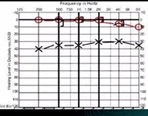
Q159. A 27-year-old male presents with complaints of reduced hearing in the left ear for 2 months. He denies tinnitus or vertigo. Rinne negative on left, positive on right and Weber lateralization to left. Pure tone audiometry is done, and the audiogram is shown below. Which of the following is the most likely diagnosis?

Tap an option to reveal the answer
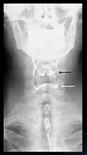
Q160. What is the marked structure?
Tap an option to reveal the answer

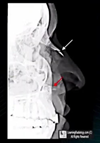
Q161. A patient presents to the emergency department with significant nasal trauma after a fall. Examination reveals a deviated nasal pyramid and palpitation confirms crepitus and mobility of the nasal bones. A lateral nasal bone X-ray confirms a displaced nasal bone fracture. Which of the following instruments is specifically designed for the closed reduction of a displaced nasal bone fracture?
Tap an option to reveal the answer

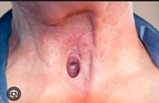
Q162. 72-year-old female smoker presents with a long history of hoarseness and difficulty swallowing. Laryngoscopy and biopsy confirm a large, advanced squamous cell carcinoma that involves both vocal cords and extends into the subglottic region and the thyroid cartilage. Which of the following surgical procedures is most appropriate to ensure complete tumor removal with adequate margins and control the disease?
Tap an option to reveal the answer

Q156. A 52-year-old female presents with progressive unilateral hearing loss, tinnitus, and imbalance. MRI brain shows a mass located in the cerebellopontine angle (CPA) extending into the internal acoustic meatus. Biopsy show verocay and Antoni bodies A and B. Based on location and imaging features, what is the most likely diagnosis?
Tap an option to reveal the answer
Q157. A 21-year-old male presents to the emergency department after blunt trauma to the nose during a football match. He has continuous anterior nasal bleeding despite compression. On anterior rhinoscopy, blood is seen actively oozing from the antero-inferior nasal septum. Which artery is most likely responsible and needs to be cauterized to stop the bleeding?
Tap an option to reveal the answer
Q1298. Identify the triangle shown in the image?
Premium Question
Unlock to see the answer & explanation
Q1393. Refer to the audiogram shown. What is the most appropriate diagnosis?
Premium Question
Unlock to see the answer & explanation
Q1321. weakness for 2 weeks. Complete blood count shows anemia and thrombocytopenia with marked leukocytosis. Peripheral blood smear reveals the following. Immunophenotyping demonstrates strong positivity for CD13 and CD33, while CD19 is negative. What is the most likely diagnosis?
Premium Question
Unlock to see the answer & explanation
Q1337. A 26-year-old man diagnosed with diabetes insipidus was started on hydrochlorothiazide. The beneficial effect of hydrochlorothiazide in this patient is primarily due to which of the following mechanisms?
Premium Question
Unlock to see the answer & explanation
Q1343. A 32-year-old man returned from a malaria-endemic area with high-grade fever for 5 days. On examination, he is drowsy, confused, and has altered sensorium. Peripheral smear shows Plasmodium falciparum. What is the most appropriate treatment?
Premium Question
Unlock to see the answer & explanation
Q1344. A 25-year-old man returns from Manipur with high-grade fever and chills for 3 days. Peripheral smear shows Plasmodium falciparum trophozoites. What is the most appropriate treatment?
Premium Question
Unlock to see the answer & explanation
Q1346. A 28-year-old woman delivers a stillborn baby at 38 weeks of gestation. On the third postpartum day, she develops breast engorgement and painful fullness. The physician decides to pharmacologically suppress lactation. Which of the following drugs is most appropriate to decrease milk secretion?
Premium Question
Unlock to see the answer & explanation
Q1356. 22-year-old man diagnosed with enteric fever (typhoid) was started on ciprofloxacin. After 5 days of therapy, he continues to have high-grade fever and toxic symptoms. Blood culture later confirms Salmonella typhi. What is the most appropriate next drug of choice?
Premium Question
Unlock to see the answer & explanation
Q1360. presents on day 7 of his treatment cycle with dysuria, suprapubic pain, and frank hematuria.Urine examination shows numerous red blood cells without infection. It is diagnosed as hemorrhagic cystitis. His current chemotherapy regimen includes the following agents. Which drug is most likely responsible for his symptoms?
Premium Question
Unlock to see the answer & explanation
Q1365. 20-year-old college student presents with fever, sore throat, and cervical lymphadenopathy. Peripheral blood smear shows atypical lymphocytes. The Paul–Bunnell heterophile antibody test is positive. What is the most likely causative organism?
Premium Question
Unlock to see the answer & explanation
Q1372. d) Toxoplasma gondii A 32-year-old unmarried man is brought reporting recurrent sexual arousal by wearing women’s clothes. The behavior has been present since adolescence and is associated with sexual gratification. The most appropriate diagnosis is
Premium Question
Unlock to see the answer & explanation
Q1376. A 30-year-old man is brought for medico-legal evaluation. He gives a history of being unable to perform sexual intercourse only with his wife, while he has normal erectile function with other females. There is no history of systemic illness or substance abuse. What is the most likely cause of his condition?
Premium Question
Unlock to see the answer & explanation
Q1377. A 35-year-old man wishes to donate a kidney to his brother. According to the Transplantation of Human Organs and Tissues Act (THOTA / Human Organ Donation Act, India), which of the following is required for the procedure?
Premium Question
Unlock to see the answer & explanation