NEET-PG PYQ logoNEET-PG PYQ
SubjectsTopicsYearsGo Premium
© 2026 NEET PG PYQ. All rights reserved.
Home
›Subjects
›Year 2025
›Microbiology
MicrobiologyBacterial Meningitis

Q22. A 19-year-old male college student is brought to the emergency department with high-grade fever, headache, neck stiffness, and photophobia. Despite supportive management, the patient rapidly deteriorates and dies within 24 hours of admission. Autopsy reveals the following findings. Which of the following is the most likely causative organism?
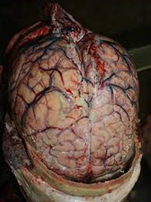
Autopsy image of brain showing purulent exudate over meninges - meningococcal meningitis
Expand

Tap an option to reveal the answer

NEET-PG2025Repeats: 2020, 2023
MicrobiologyFungal Infections / Histoplasmosis

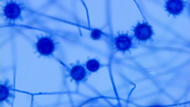
Q23. A 35-year-old man presents with a 2-week history of dry cough, low-grade fever, night sweats, and unintentional weight loss. He has no significant past medical history and is not immunocompromised. Chest X-ray reveals bilateral hilar lymphadenopathy with patchy pulmonary infiltrates. A lactophenol cotton blue mount reveals small intracellular narrow based budding yeast forms. What is the most likely diagnosis?

Lactophenol cotton blue mount showing small intracellular narrow-based budding yeast forms - Histoplasma capsulatum
Expand

Tap an option to reveal the answer

NEET-PG2025Repeats: 2022
MicrobiologyIntestinal Parasites

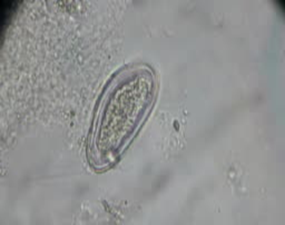
Q25. A 6-year-old child is brought to the pediatric OPD by his mother with complaints of intense perianal itching, especially at night. On examination, small white thread-like worms are seen in the perianal area. What is the most likely causative organism?

Tap an option to reveal the answer

Microscopy image showing Enterobius vermicularis egg with characteristic D-shaped flattened side
Expand
NEET-PG2025Repeats: 2019, 2023
MicrobiologyParasitology / Filariasis

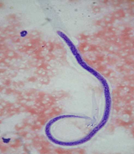
Q28. A 45-year-old man from Bihar presents with progressive, non-pitting swelling of both lower limbs for the past several months. Peripheral blood smear taken at night reveals the following structure. What is the most likely cause of this patient's swelling?

Peripheral blood smear showing Wuchereria bancrofti microfilaria - curved sheathed larva
Expand

Tap an option to reveal the answer

NEET-PG2025Repeats: 2020, 2022
MicrobiologyStreptococcal Infections

Q24. Group A Streptococcus is the most common cause of bacterial pharyngitis in school aged children. Which of the following bacterial components is primarily responsible for its attachment to fibronectin on the epithelial lining of the pharynx?

Tap an option to reveal the answer

NEET-PG2025Repeats: 2021
MicrobiologyOncogenic Viruses

Q26. Patient presents with a persistent red lesion over the lateral border of the tongue that has not healed for several weeks. Biopsy confirms squamous cell carcinoma of the oral cavity. Which of the following viral infections is most likely associated with the development of this malignancy?

Tap an option to reveal the answer

NEET-PG2025Repeats: 2020, 2022
MicrobiologyFungal Infections / Aspergillosis

Q27. A 40-year-old immunocompromised patient presents with fever, productive cough, and episodes of hemoptysis. Chest imaging shows cavitary lesions in the lungs. BAL is performed, and microscopy reveals acute-angled, septate hyphae with dichotomous branching. What is the most likely causative organism?

Tap an option to reveal the answer

NEET-PG2025Repeats: 2019, 2021, 2024
MicrobiologyAerobic Actinomycetes / Nocardia

Q29. A 50-year-old immunocompromised man presents with chronic meningitis features. Microscopy reveals Gram-positive, branching filamentous bacteria. The organism is acid-fast on modified Ziehl-Neelsen stain, and grows on paraffin bait culture. What is the most likely causative organism?

Tap an option to reveal the answer

NEET-PG2025Repeats: 2021, 2023
MicrobiologyFood-borne Illness / Campylobacter

Q30. An outbreak of dysentery-like illness occurred in an old age home. The patients presented with bloody diarrhea, abdominal cramps, and fever. A history reveals that a social worker had brought and served raw, unpasteurized milk to the residents. Which of the following is the most likely causative organism?

Tap an option to reveal the answer

NEET-PG2025Repeats: 2022
MicrobiologyMolecular Diagnostics / PCR

Q122. Which of the following molecular diagnostic tests is useful in syndromic conditions like meningitis?

Tap an option to reveal the answer

NEET-PG2025Repeats: 2021
MicrobiologyHerpesvirus Infections

Q131. Patient with facial pain and vesicles around mouth. Tzanck smear reveals multinucleate giant cells with intra-nuclear inclusions. What is the most likely causative agent?

Tap an option to reveal the answer

NEET-PG2025Repeats: 2019, 2022
MicrobiologyBacillus anthracis / Anthrax

Q132. A patient presents with pustular lesions on the hand. Gram stain of the smear reveals gram-positive organisms, and the culture shows MacFadyen's positive reaction. Which of the following is the most likely causative pathogen?

Tap an option to reveal the answer

NEET-PG2025Repeats: 2021
MicrobiologyMycology
Premium

Q1385. Identify the structure marked?

A.Pharyngeal tonsil
B.Lingual tonsil
C.Palatine tonsil
D.Tubal tonsil

Premium Question

Unlock to see the answer & explanation

Unlock Premium — ₹299/yr
FMGE2025Repeats: N/A
MicrobiologyImmunology
Premium

Q1409. A patient presents with pain, redness, and photophobia. The clinical image shows a dendritic corneal ulcer with terminal bulbs on fluorescein staining. What is the treatment of choice?

A.Antibiotics
B.Topical acyclovir 3% with atropine
C.Steroids
D.Oral acyclovir alone

Premium Question

Unlock to see the answer & explanation

Unlock Premium — ₹299/yr
FMGE2025Repeats: N/A
MicrobiologyGeneral Microbiology
Premium

Q1290. 40-year-old man sustains a head injury involving the left temporal region following a road traffic accident. After regaining consciousness, he speaks fluently but his speech is irrelevant and meaningless. He is unable to comprehend spoken language. Which cortical area is most likely affected?

A.Broca’s area
B.Wernicke’s area
C.Primary auditory cortex
D.Arcuate fasiculus

Premium Question

Unlock to see the answer & explanation

Unlock Premium — ₹299/yr
FMGE2025Repeats: N/A
MicrobiologyGeneral Microbiology
Premium

Q1318. of life. Laboratory investigations reveal severe hyperammonemia, low citrulline levels, elevated plasma glutamine, and normal orotic acid levels in urine. There is no evidence of metabolic acidosis or hypoglycemia. What is the most likely diagnosis?

A.Hyperammonemic encephalopathy
B.Type II hyperammonemia
C.Type I hyperammonemia
D.Encephalopathy

Premium Question

Unlock to see the answer & explanation

Unlock Premium — ₹299/yr
FMGE2025Repeats: N/A
MicrobiologyImmunology
Premium

Q1327. A 7-year-old child presents with a rapidly enlarging jaw mass. The lymphoma is known to have a strong association with Epstein–Barr virus infection. Which of the following chromosomal translocations is most characteristic of this condition?

A.t(14;18)
B.t(11;14)
C.t(8;14)
D.t(9;22)

Premium Question

Unlock to see the answer & explanation

Unlock Premium — ₹299/yr
FMGE2025Repeats: N/A
MicrobiologyGeneral Microbiology
Premium

Q1350. The primary mechanism of action of botulinum toxin is?

A.Irreversible inhibition of acetylcholinesterase
B.Blockade of postsynaptic nicotinic receptors
C.Inhibition of release of acetylcholine from presynaptic nerve terminals
D.Competitive antagonism at muscarinic receptors

Premium Question

Unlock to see the answer & explanation

Unlock Premium — ₹299/yr
FMGE2025Repeats: N/A
MicrobiologyBacteriology
Premium

Q1352. vomiting, or vaginal discharge. Her vitals are stable, and there is no history of recent antibiotic use or urinary tract abnormalities. Empirical therapy is being considered. Which of the following drugs should NOT be preferred as first-line empirical treatment in this case?

A.Nitrofurantoin
B.Cotrimoxazole
C.Ciprofloxacin
D.Fosfomycin

Premium Question

Unlock to see the answer & explanation

Unlock Premium — ₹299/yr
FMGE2025Repeats: N/A
MicrobiologyBacteriology
Premium

Q1355. confused, febrile (39.5°C), with a positive Kernig’s sign and neck rigidity. On CSF analysis show low glucose. Fundoscopy shows no papilledema. The physician decides to start empirical antibiotics immediately. Which of the following is the most appropriate empirical therapy?

A.Meropenem alone
B.Ceftriaxone + Vancomycin
C.Vancomycin alone
D.Clindamycin

Premium Question

Unlock to see the answer & explanation

Unlock Premium — ₹299/yr
FMGE2025Repeats: N/A
PreviousNext
Previous
123
Next
Showing 1-20 of 47 questions
for subject "Microbiology"

from year 2025